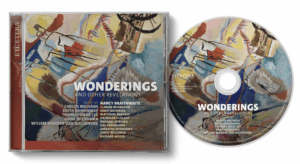
My trio for clarinet, violin and piano, Come Shepherds Deck Your Heads, has recently been recorded and is being released on the CD Wonderings and Other Revelations (Etcetera KTC 1835), which features pieces written for the American clarinettist Nancy Braithwaite, who lives in the Netherlands. Nancy has always been very active with her own chamber music ensembles, and this CD is the result of that, full of works written especially for her and her friends.
The trio, composed in 2004, was intended for her then-current Bartók Trio, with Marta Abrams on violin and Bas Verheijden on piano.
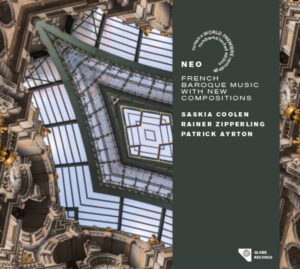
The time has come: the trio of Saskia Coolen (recorder), Rainer Zipperling (gamba) and Patrick Ayrton (harpsichord) will play the premiere of their new French Baroque programme – featuring Couperin, Marais and Rebel, as well as new pieces by Torben Klaes, Calliope Tsoupaki and myself. Friday 22 November 20.15 at the Stadsklooster, Kanaalstraat 198 in Utrecht. For Saskia, I wrote the suite L’Europe des Amants – it is dedicated to her parents. Something about its background here. This is also the presentation of the CD Neo: The Burgundy Sessions (Globe).
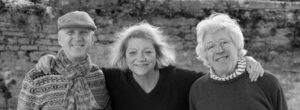
Patrick Ayrton, Saskia Coolen en Rainer Zipperling
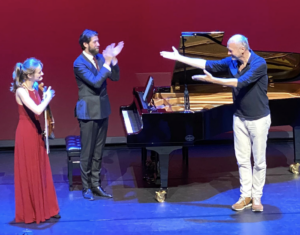
The great concert by Noa Wildschut and Thomas Beijer in the Muziekkring Heerhugowaard makes one hope they will have the chance to play my Deep River sonata more often. After their incredibly delicate and intelligent performances of Debussy’s Sonata and Brahms’ First Sonata, they lived up to the high expectations after the interval with lyrical and powerful playing. It was astonishing how much understanding they displayed in this, their first performance. Hopefully, they can continue to develop their collaboration.
I was very impressed by the audience’s great appreciation and kindness of the organisers.
The sonata was written over a decade ago with the financial support of a similar group of chamber music lovers, the concert series in Zeist that also hosted the premiere.
At the Amsterdam Muze van Zuid 2023 Festival violinist Emma Roijackers gave the first Dutch performance of my Zarabanda for solo-violin, to great public acclaim.
Emma Roijackers
The first version of my Zarabanda dates back to 2014. It was written then for Rosanne Philippens as the Dutch part of her programme for the International Violin Competition Freiburg (where she took first prize). Emma now plays in Muze van Zuid not only a first public Dutch performance, but also a new revised (I hope: improved) version. This final version became all the more a virtuoso, but at the same time very lyrical piece in which echoes of the original 17th-century South American Zarabanda, which was rhythmic and fast, mingle with later Romantic versions, which are slower, solemn and more in the spirit of bel canto.
Thomas Beijer played the world premiere of the piece I wrote especially for him, The Pilgrim’s Progress, on 26 March in the series of Slot Concerts at Slot Zeist. The programme included Schubert’s Moments Musicaux, Falla’s El Amor Brujo and Chopin’s 3rd sonata, op. 58. My piece still has two movements – perhaps a third and final movement will be added. The work is based on melodies from the Llibre Vermell.
Knowing Thomas’ love of Iberian, I chose this collection of melodies from the Catalan monastery of Montserrat as an important starting point – and because they are beautiful tunes that, moreover, were once the first ‘Early Music’ I heard. They are now ‘standards’ of medieval musical practice. The collection was intended to put edifying lyrics in the mouths of the elated pilgrims, when they finally reached the Black Madonna in the high monastery, so that their wild dances would still retain the appropriate sacred character…
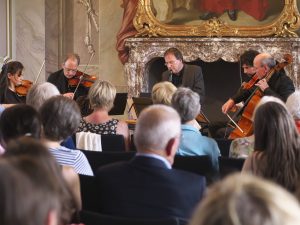
My beautiful Trio for violin, clarinet and piano will be performed a number of times in the near future ahead of a CD recording in April:
this Sunday 12 February between 10.00 and 11.00 on NPOKlassiek in the radio programme Spiegelzaal from the Concertgebouw;
on Saturday 18 February at the Vondelkerk in Amsterdam in a fine series of Bartók Salon Concerts (ticket sales here);
and finally on 2 April in the Kromme Rijn Concerts (the concert that had to be cancelled last year due to illness – ticket sales here).
A constant factor in these performances is masterpianist Bas Verheijden, who plays in Amsterdam with Emma Roijackers (violin, artistic director) and Stefan Woudenberg (clarinet) and in Bunnik with Nancy Braithwaite (clarinet, artistic director) and Amarins Wierdsma (violin). He will also record the piece with the latter – more on that later.
In both programmes, my piece accompanies Béla Bartók’s famous trio Contrasts. Where the Hungarian Bartók uses folk music from the Balkans, in my piece you will hear historical Dutch folk music (yes, a rarity in new classical music!) – alongside tango, gamelan and much more.
I had to wait for two seasons, and each time corona was the game-breaker. But now it is finally going to happen! At the International Chamber Music Festival Utrecht, Camerata Trajectina will play my song cycle Aan de Bruid on poems by Ingmar Heytze on 30 December at 17.00.
Utrecht will be celebrating throughout the summer of 2022: in 1122 the city received city rights and this 900-year jubilee is being exuberantly celebrated under the motto Utrecht 900: City without walls. As part of the festivities, the Utrechts Kamerkoor and the City of Utrecht commissioned me to write a choral work. The text was provided by the choir and written by one of the choir members. It is, quite appropriately, about how the city and the rights and duties of its citizenry developed into modern Utrecht society.
In Münster, on June, 25 and in Lengerich, on June, 26, Peter Holtslag (recorders) and the Ruysdael Quartet played the German première of my Songs of War & Peace in the opening weekend of the Summerwinds Festival. The programme also included Erwin Schulhoff’s Five Pieces for String Quartet and Gordon Jacob’s Suite (alto recorder and quartet). Three suite-like works with a historicizing slant, that is. Plus, with a leading role for the recorder alongside the string quartet that is rarely found in concert programs.
Peter Holtslag & the Ruysdael Quartet, Erbdrostenhof, Münster (photo Susanna Schulte)
My Songs of War & Peace are based on melodies of the Thirty Years’ War period, from the countries that suffered most: the German lands, the Netherlands, and Bohemia, where it all started in 1618 with the Defenestration of Prague. The two German performances were all the more fitting because they took place in Münster, where in 1648 the various treaties were signed that concluded the war (the Peace of Westphalia), and in Lengerich, the ancient small town north of Münster that prides itself in the Lengericher Conclusum, a treaty signed there in 1645 advising that all representative political bodies should partake in the peace talks (including the towns and cities, most of whom were not combatants but victims).
The Münster concert, in the sold out Erbdrostenhof, was a resounding succes.
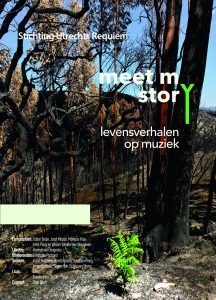
The Utrechts Requiem Foundation presented the third edition of the Utrecht Requiem, extraordinary life stories set to music, again framed by the Introitusand In Paradisum that I wrote for earlier editions of this project.

 At the Amsterdam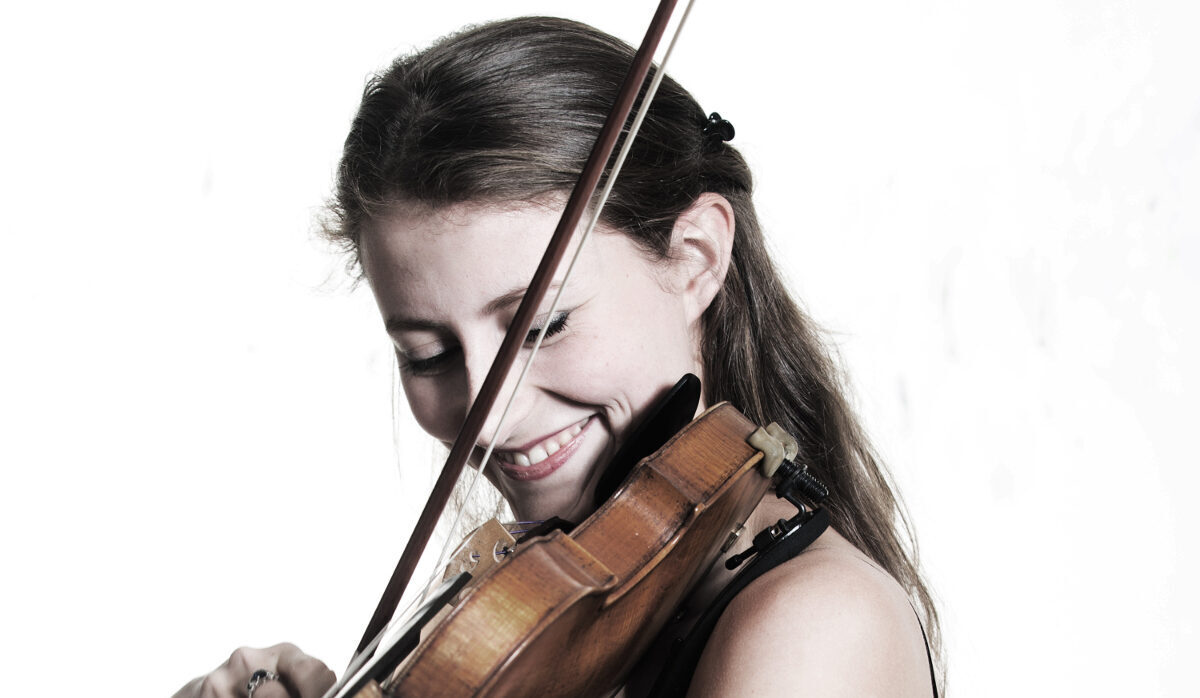
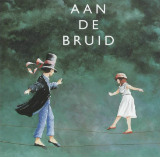 I had to wait for two seasons, and each time corona was the game-breaker. But now it is finally going to happen! At the International Chamber Music Festival Utrecht, Camerata Trajectina will play my song cycle Aan de Bruid on poems by Ingmar Heytze on 30 December at 17.00.
 Utrecht will be celebrating throughout the summer of 2022: in 1122 the city received city rights and this 900-year jubilee is being exuberantly celebrated under the motto Utrecht 900: City without walls.
 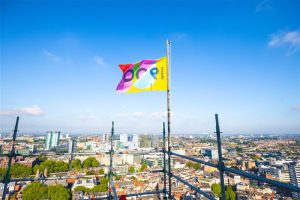 As part of the festivities, the Utrechts Kamerkoor and the City of Utrecht commissioned me to write a choral work. The text was provided by the choir and written by one of the choir members. It is, quite appropriately, about how the city and the rights and duties of its citizenry developed into modern Utrecht society.
  The programme also included Erwin Schulhoff’s Five Pieces for String Quartet and Gordon Jacob’s Suite (alto recorder and quartet). Three suite-like works with a historicizing slant, that is. Plus, with a leading role for the recorder alongside the string quartet that is rarely found in concert programs.